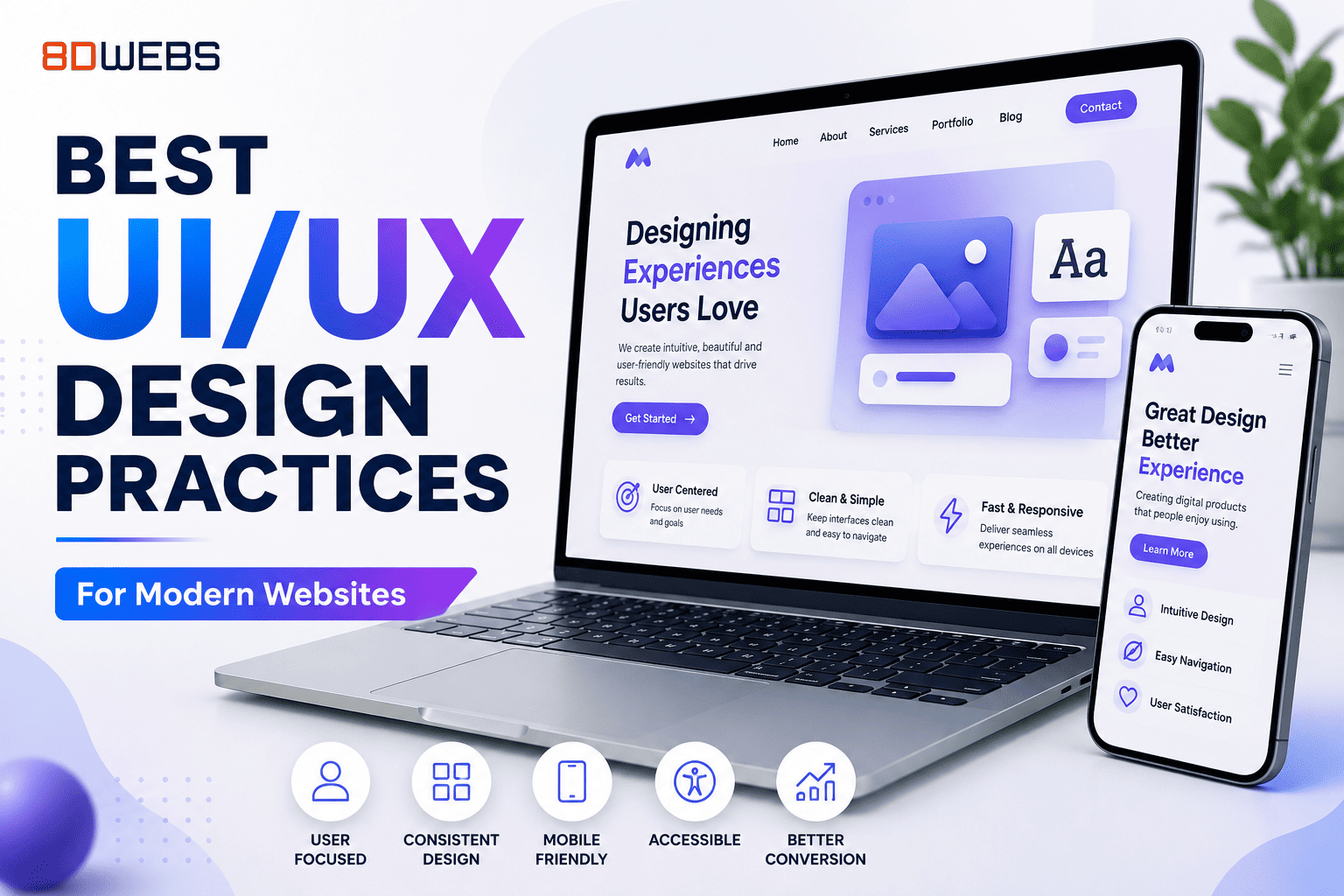
User experience begins with understanding jobs-to-be-done: what visitors need in the first thirty seconds, and what proof removes doubt. Interface design should serve those jobs, not showcase novelty for its own sake.
Information architecture organizes services, industries, and resources so navigation matches mental models. Limit top-level choices; use descriptive labels instead of cute jargon.
Visual hierarchy guides eyes to headlines, benefits, evidence, and primary CTAs. Whitespace is functional—it reduces cognitive load. Consistent spacing and type scales make pages feel professional.
Forms should ask only for fields you will use. Multi-step wizards beat endless single pages for complex quotes. Inline validation prevents submission surprises.
Accessibility is UX for everyone: contrast, focus states, keyboard paths, captions, and motion reduction respect user preferences. WCAG-aligned patterns often improve mobile usability too.
Microcopy matters: button labels like "Get pricing" outperform vague "Submit." Error messages should explain fixes. Empty states should coach next actions.
Prototype and test with five to eight target users before full build. Remote moderated sessions uncover navigation issues analytics alone miss.
8D Webs pairs UX thinking with implementation constraints early—so designs ship performant, accessible, and aligned to your brand rather than stuck in unusable mockups.