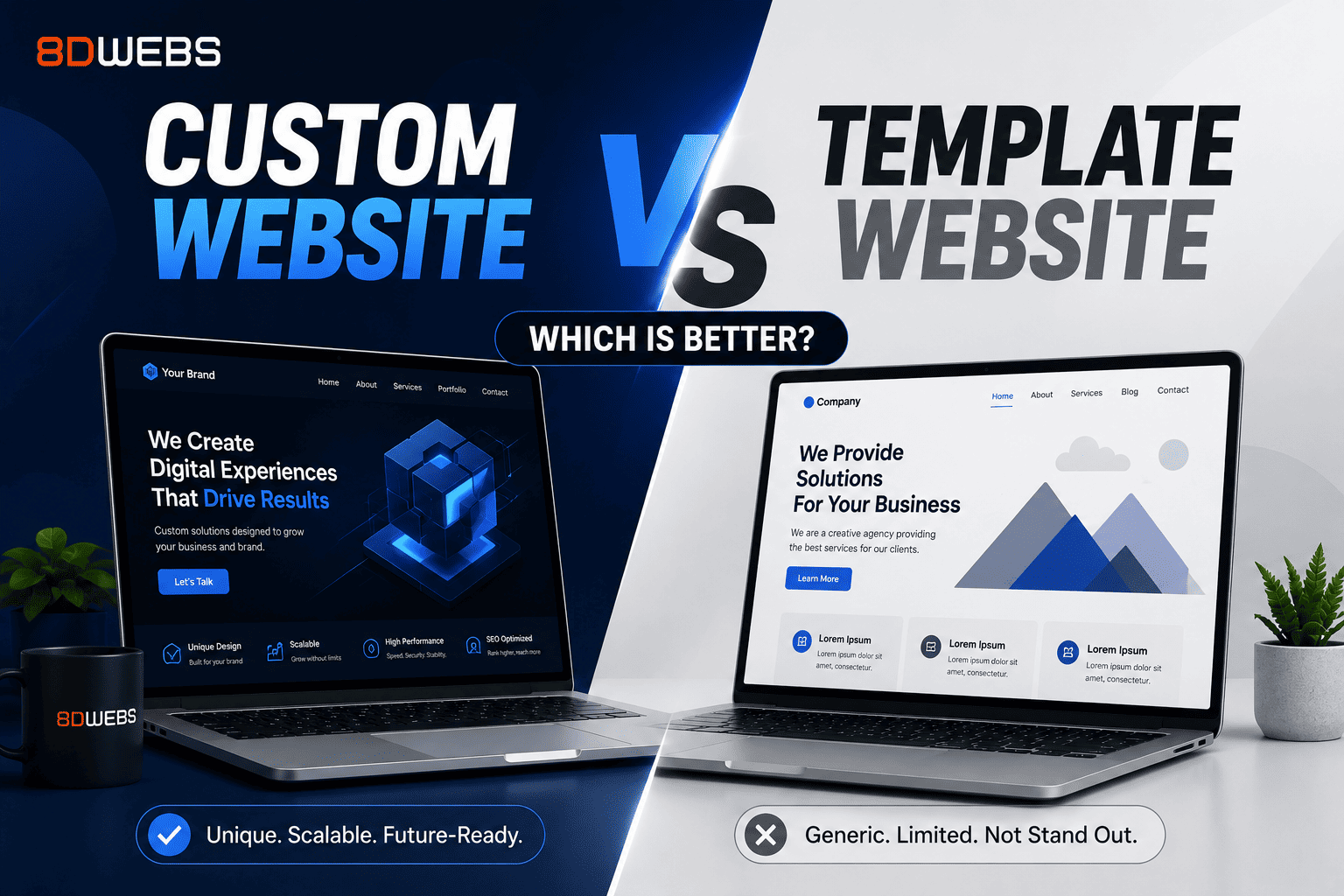
Template websites—WordPress themes, SaaS builders, marketplaces—promise speed and low upfront cost. Custom websites promise fit, performance tuning, and ownership of code. The right choice depends on your growth stage, differentiation, integrations, and how long you plan to keep the property.
Templates shine when you need a simple presence quickly: portfolio, basic brochure, event landing. Prebuilt sections and plugins accelerate launch. Tradeoffs appear as you grow: similar-looking competitors, plugin bloat, security patches across third-party extensions, and SEO limitations when the theme fights your content structure.
Custom development shines when your funnel is specific: configurators, multi-step quotes, member portals, complex catalogs, or industry compliance needs. You control component design, data models, and API integrations. Performance budgets can be enforced because you are not dragging unused theme assets on every page.
Total cost of ownership over three to five years often surprises teams. Templates look cheap initially, then subscription fees, premium plugins, developer hours fighting theme constraints, and migration pain add up. Custom has higher upfront investment but frequently lower friction when requirements change.
SEO and content operations differ. Custom lets you implement clean URL structures, structured data, and editorial workflows aligned to your teams. Templates can do SEO well when configured carefully, but many sites ship with duplicate tags, slow sliders, and bloated CSS that hurt rankings until remediated.
Brand differentiation is a strategic question. If your category is crowded, a template aesthetic signals "generic vendor." Custom visual language, photography direction, and UX patterns reinforce positioning—premium, technical, friendly, enterprise—before a word is read.
Hybrid approaches exist: headless CMS plus a bespoke front end, or a starter framework with custom modules. These balance speed and fit. The decision should be documented: what must be unique on day one versus what can wait until phase two.
8D Webs advises honestly on build vs buy. When templates are enough, we say so. When custom returns measurable value—conversion, speed, integrations—we scope phases with clear milestones so you are never paying for complexity you do not need.