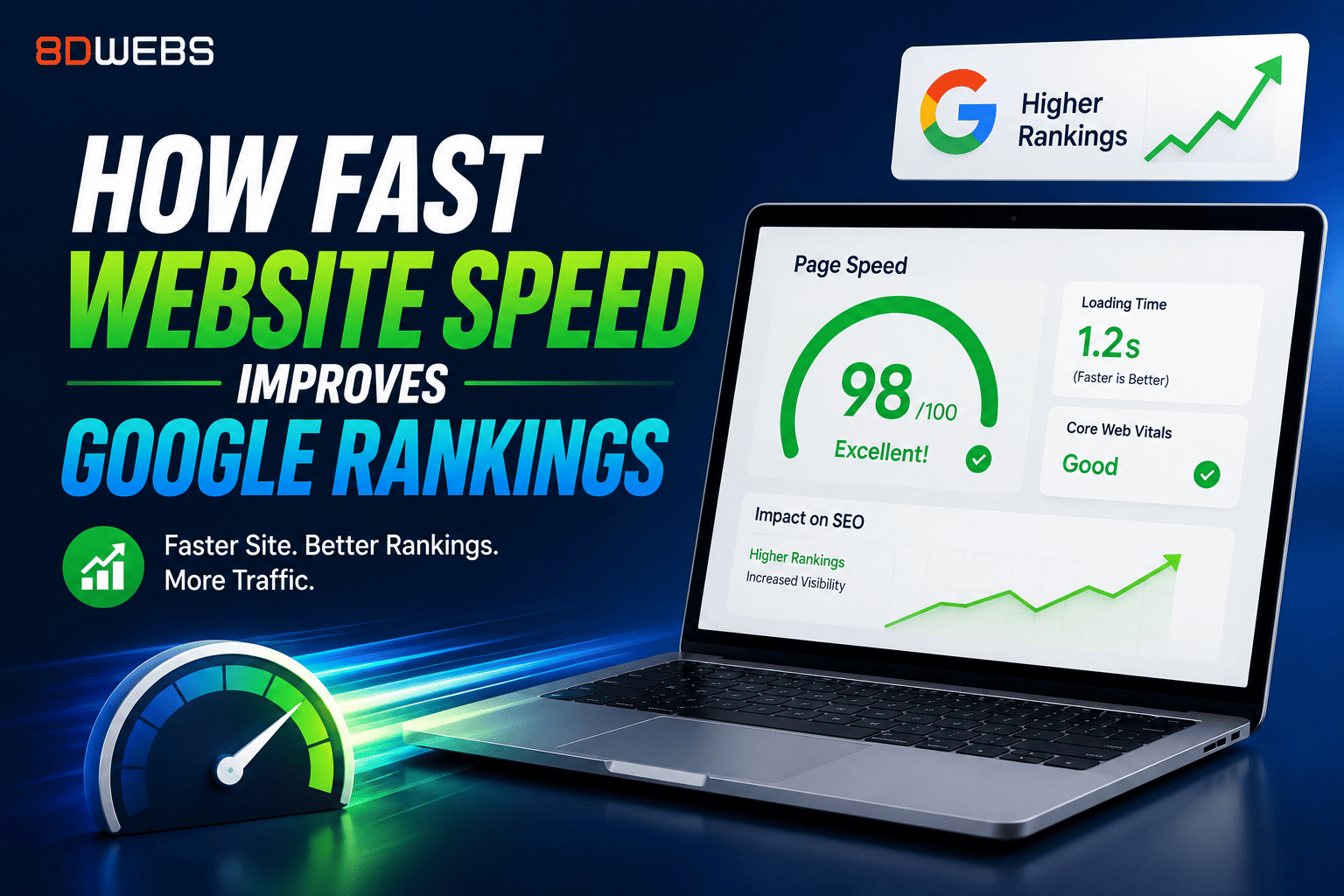
Google has used speed-related signals for years because slow pages frustrate users and waste crawl budget. Core Web Vitals translate that frustration into metrics: loading, interactivity, and visual stability. Sites that pass on real devices—not just lab tests—tend to retain visitors longer and complete more goals.
Most slowness is fixable engineering debt: uncompressed images, render-blocking scripts, excessive fonts, unoptimized video, and third-party tags from ads, chat, and analytics piled without governance. A performance audit usually finds a handful of items responsible for most delays.
Image strategy is the fastest win. Modern formats (WebP/AVIF), responsive srcset, lazy loading below the fold, and compression pipelines on upload reduce weight dramatically. Designers should specify aspect ratios so layouts do not jump while assets load.
JavaScript discipline matters on marketing sites. Not every page needs every widget. Defer non-critical scripts, code-split application bundles, and prefer server rendering or static generation for content-heavy pages so first paint arrives with meaningful HTML.
Hosting and CDN choices affect global audiences. TLS, HTTP/2 or HTTP/3, edge caching for static assets, and sane cache headers for HTML where appropriate shrink time-to-first-byte. Database queries on dynamic pages should be profiled—N+1 queries silently tax product and blog templates.
Speed and SEO interact with content quality. Fast thin pages still fail; fast helpful pages win. Combine performance work with better internal linking, clear headings, and updated copy so improvements show up in engagement metrics, not only technical scores.
Set a performance budget per template: maximum kilobytes, script count, and third-party domains. Enforce it in CI or release checklists so new campaigns do not erode gains.
8D Webs treats performance as a feature, not an afterthought. We profile real pages, fix bottlenecks, and document what changed so your team knows how to keep the site fast after launch.