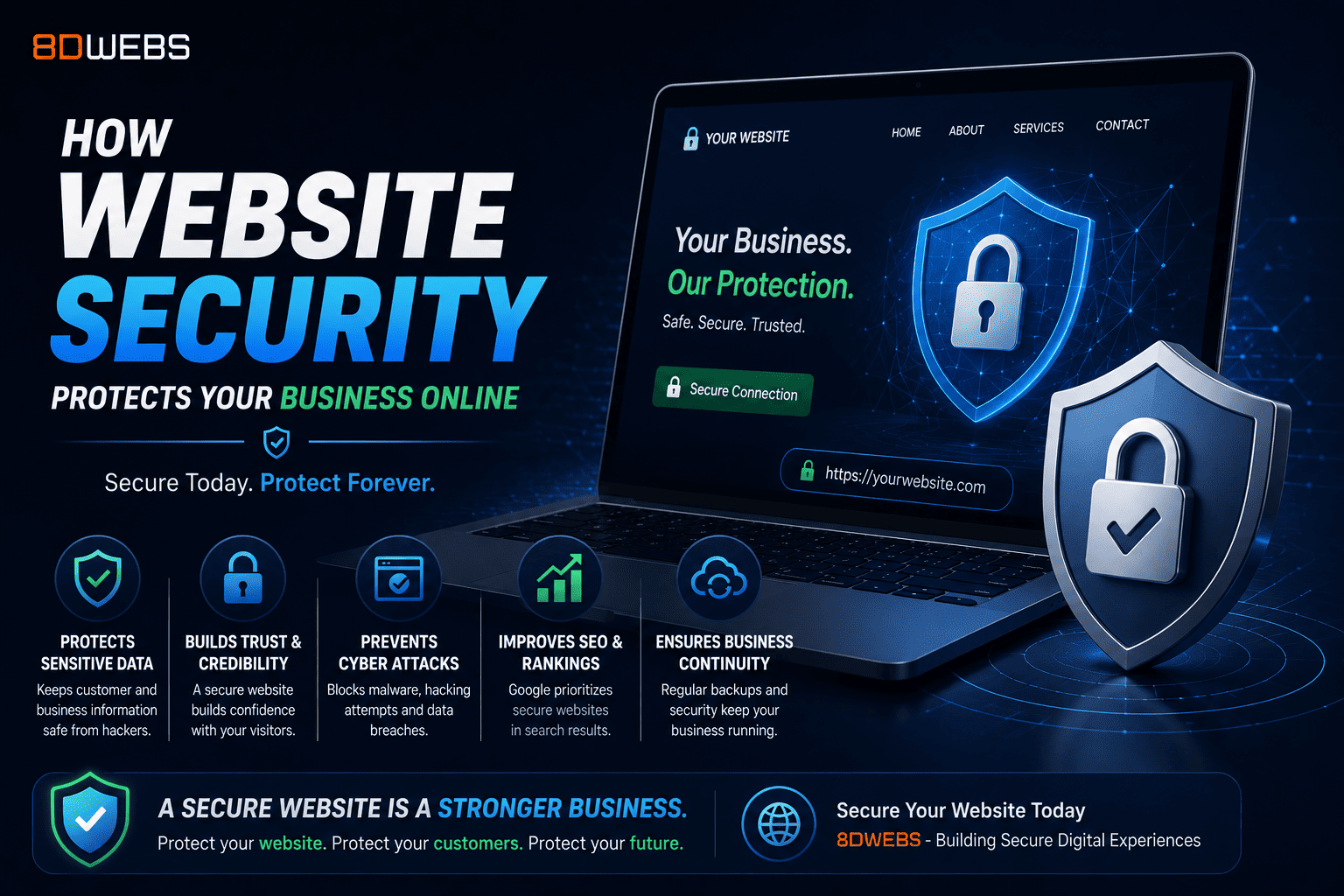
Website breaches hurt customers, invite legal exposure, and trigger downtime during recovery. Security is business continuity, not an IT side quest.
Baseline controls: HTTPS, hardened hosting, Web Application Firewall where appropriate, rate limiting on login and forms, CAPTCHA or equivalent on public endpoints, and sanitized inputs to block injection attacks.
Authentication security for admins requires strong passwords, MFA, limited login attempts, and IP alerts on foreign logins. Separate accounts per person—no shared "marketing" logins.
Dependency and patch management keeps CMS, plugins, and frameworks current. Remove unused plugins—they expand attack surface silently.
Data minimization collects only fields you need and stores them encrypted at rest where sensitive. Payment card data should use PCI-compliant processors—never store raw card numbers on your server.
Monitoring and incident response: know who to call, how to take the site offline safely, and how to communicate with customers if data is affected.
Backups and tested restores are part of security. Ransomware response without backups forces painful choices.
8D Webs implements secure development practices, hosting guidance, and maintenance to reduce risk without paralyzing marketing agility.